
Search Wake County Felony Records
Wake County felony records are stored at the Justice Center in Raleigh, North Carolina. As the state capital and the most populated county, Wake County handles a large volume of criminal cases each year. The Clerk of Superior Court keeps all felony filings, and the City-County Bureau of Identification provides criminal record inquiries. Whether you visit in person or search online, this guide explains each step to find felony records in Wake County.
Wake County Justice Center
The Wake County Justice Center sits on South Salisbury Street in downtown Raleigh. It is one of the busiest court buildings in North Carolina. Superior Court handles all felony cases here, and District Court takes on misdemeanors. The Clerk of Superior Court manages the records vault on site. Walk-in visitors can use public access terminals to search cases at no charge.
Wake County was the pilot county for the NC eCourts system. It went live on February 13, 2023, as Track 1. That makes Wake County the first place in the state where felony records moved to the new digital platform. Every case filed since the switch feeds into the statewide eCourts database. Older cases have also been loaded into the system. This head start means Wake County has one of the most complete online record sets in North Carolina, and searching from home is simple and fast.
| Address | 300 S. Salisbury St, Raleigh, NC 27601 |
|---|---|
| Phone | (919) 792-4000 |
| Hours | Monday - Friday, 8:30 AM to 5:00 PM |
| Judicial District | 10 |
| eCourts Status | Track 1 (Pilot) - Live since February 13, 2023 |
The Wake County Justice Center page on the NC Courts site has calendars, local rules, and contact details for every court office in the building.
CCBI Criminal Record Inquiries
Wake County has a resource that most counties do not. The City-County Bureau of Identification, known as CCBI, runs criminal record searches for the public. Their office is at 330 S. Salisbury Street, on the second floor, just steps from the Justice Center. CCBI is a joint operation between the City of Raleigh and Wake County. It keeps its own arrest records database and offers a search portal.
You can visit CCBI in person during business hours. They have a public self-service terminal at the Clerk of Court office as well. The CCBI phone number for criminal inquiries is 919-792-4005. For traffic records, call 919-792-4300. Hours are Monday through Friday, 8:30 a.m. to 5:00 p.m.
The CCBI criminal records page on the Wake County government site explains how to submit a request. It also links to the Criminal Arrest Records Portal, where you can search by name. This is one of the fastest ways to pull felony arrest data tied to Wake County.
Below is the CCBI criminal record inquiries page on the Wake County government website.
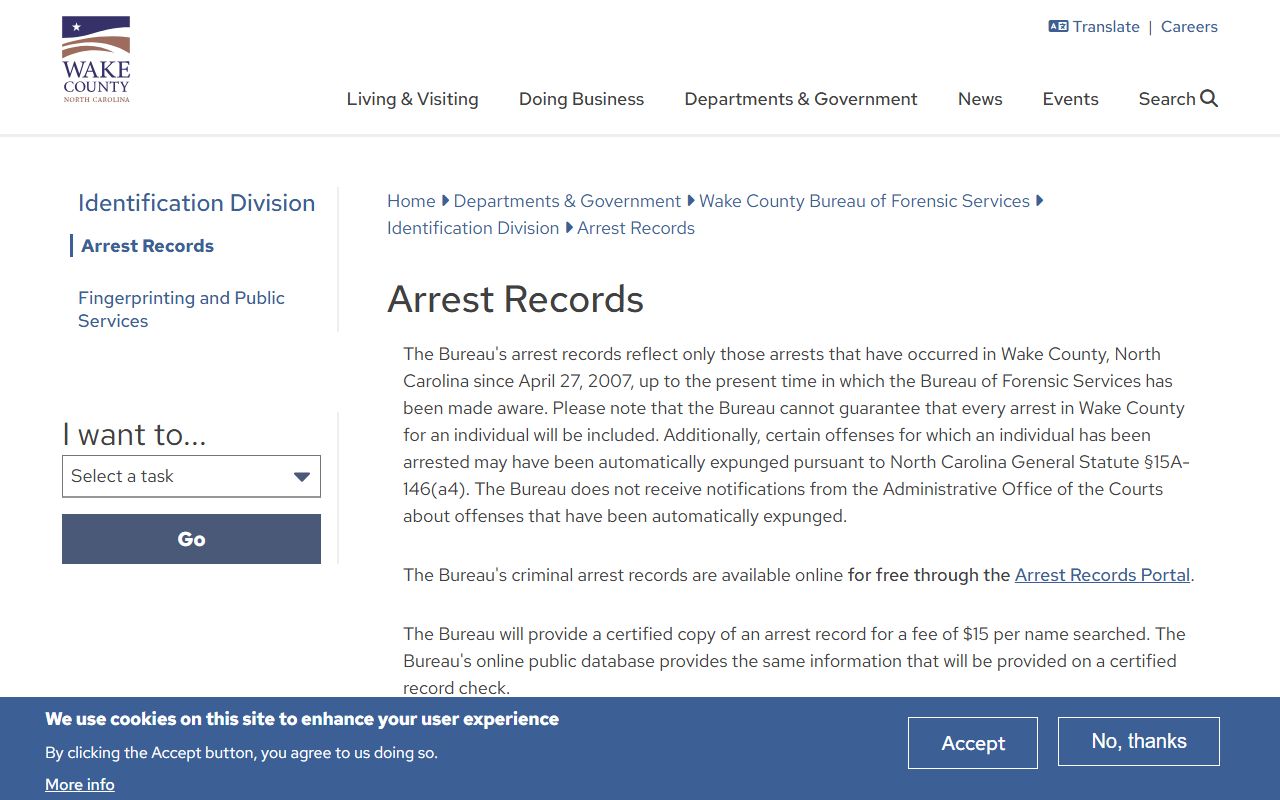
This page walks you through the CCBI search process and lists office hours for in-person visits in Raleigh.
How to Find Felony Records in Raleigh
Wake County gives you more than one way to look up felony records. Here are the main options:
- Visit the Justice Center at 300 S. Salisbury St and use the free public access terminals
- Search the NC eCourts portal online by name or case number
- Go to the CCBI office at 330 S. Salisbury St for an arrest record search
- Call the Clerk of Superior Court at (919) 792-4000 with case details
- Request a certified copy in person with a valid photo ID
Online searches through eCourts are free for basic case data. You can see charges, hearing dates, and outcomes. Certified copies cost $25 and must be picked up at the clerk's office. Bring cash, a check, or a money order. Some offices now accept cards.
Note: The CCBI search covers arrest data specific to Wake County and may include records not yet in the statewide eCourts system.
Felony Cases in Wake County Courts
Felony cases in Wake County begin with an arrest or a grand jury indictment. The case moves to Superior Court. A judge or jury weighs the facts. Common felony charges in Wake County include drug offenses, assault, burglary, and fraud. Each charge has a class under North Carolina General Statutes. The class sets the sentence range.
The court file holds the arrest report, the indictment, all motions, and the final judgment. These are public records in Wake County unless sealed by a judge. The clerk stores each file and can hand over copies. Given the volume of cases in Raleigh, wait times at the window can be longer than in smaller counties. Plan to arrive early if you need to pick up a certified document.
Wake County also handles cases from nearby towns like Cary, Apex, and Garner. All felony charges from these areas go through the Wake County Justice Center. So a search here may turn up cases from across the county, not just Raleigh proper.
Wake County Felony Record Resources
Beyond the courthouse and CCBI, other tools can help you track down criminal records tied to Wake County. The North Carolina State Bureau of Investigation runs statewide background checks that cover all 100 counties. The SBI is based in Raleigh, so its main office is close to the Wake County Justice Center. A statewide check takes longer than a local search but pulls data from every county in the state.
The NC Department of Adult Correction has an offender search tool. It covers state prisons and probation back to 1972. If a person was convicted of a felony in Wake County and sent to a state facility, they will appear in this system. Local jail data is not part of this search.
Victims of crime in Wake County can sign up for VINE alerts. This free service sends a notice when an offender's custody status changes. You need the person's name or ID to set it up. The SBI expungement page explains how some felony charges can be removed from a record under certain conditions.
The image below shows the Wake County Justice Center listing on the NC Courts website.
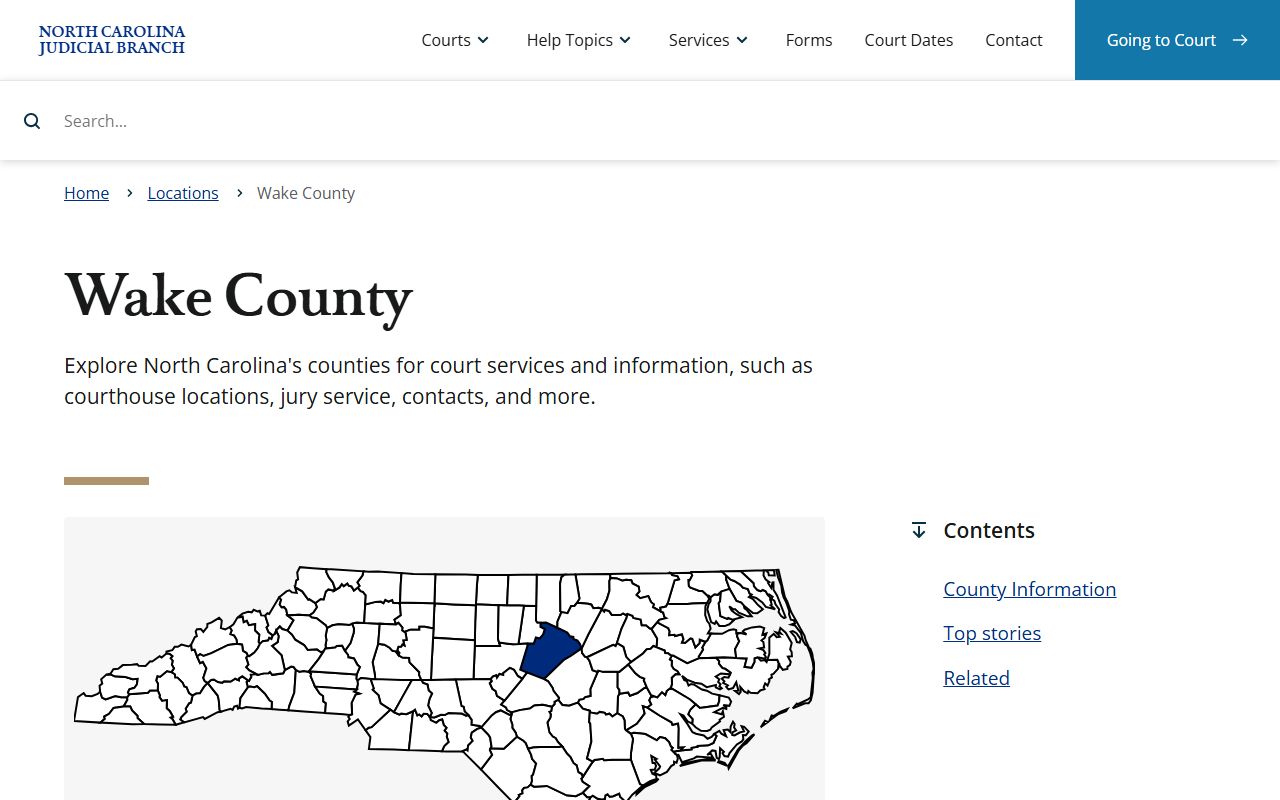
Use this page to find court calendars, office contacts, and local rules that apply to felony cases in Wake County.
Note: Wake County's high case volume means certified copy requests may take longer than in rural counties, so plan your visit with extra time.