
Charlotte Felony Records
Charlotte felony records are kept at the Mecklenburg County Clerk of Superior Court. This is the largest city in North Carolina. All felony cases here go through the county court system. You can look up case details, court dates, and final outcomes for felony charges filed in Charlotte. The NC eCourts portal lets you search records from home. You can also visit the courthouse to view files in person. Most records are open to the public under state law.
Charlotte Felony Court Location
Felony cases in Charlotte are heard at the Mecklenburg County Courthouse. The building sits in uptown Charlotte near the transit center. Superior Court handles all felony matters here. The clerk of court keeps case files and provides copies to the public. Walk-in visits are welcome on weekdays.
| Court | Mecklenburg County Clerk of Superior Court |
|---|---|
| Address | 832 East Fourth Street Charlotte, NC 28202 |
| Phone | (704) 686-0400 |
| Hours | Monday through Friday, 8:00 AM to 5:00 PM |
| Judicial District | District 26 |
Mecklenburg County is in Judicial District 26. This court serves Charlotte and all other towns in the county. Bring a valid photo ID when you go. Security will screen you at the door. Paid parking is close by in nearby garages and street meters. CATS bus routes and the LYNX light rail both stop near the courthouse, so public transit is a good way to get there. For criminal case questions, you can reach the clerk by email at Mecklenburg.Criminal@nccourts.org.
Note: Public access terminals at the courthouse let you search Charlotte felony records at no cost during business hours.
How to Search Felony Records
There are two main ways to look up Charlotte felony records. You can search online or go to the courthouse. Each method has its own strengths. Online works best for quick lookups. In-person visits let you see full case files and get copies right away.
The NC eCourts portal covers all of Mecklenburg County. You can search by name or case number. The site shows party names, charges, court dates, and case status. It is free to use for basic data. This tool pulls from the same system the court uses. Results show up fast, and you can run as many searches as you need. For copies of actual documents, you must contact the clerk or visit in person.
The NC Courts help page explains what records are public and how to get them. Most felony records in Charlotte are open. Some files may be sealed by a judge. Juvenile cases are not public. Active cases and closed ones both show up in the system. You can track a case from the first charge all the way through sentencing.
To search in person, go to the clerk office on the third floor. Staff can pull up records by name or case number. You can ask for plain copies or certified ones. Certified copies cost more but carry the court seal. Call (704) 686-0400 to ask about current copy costs before your visit.
Charlotte Police and Felony Records
The Charlotte-Mecklenburg Police Department handles law enforcement for the city. CMPD is one of the largest police forces in the Southeast. Arrests made by CMPD lead to felony cases in Mecklenburg County Superior Court. The police keep their own records of arrests and incidents. Court records are a separate set of files held by the clerk.
You can reach the Charlotte-Mecklenburg Police Department for police report requests. Their records division handles those inquiries. The CMPD headquarters is at 601 E Trade Street, Charlotte, NC 28202. For non-emergency calls, dial 704-336-7600. The records division can be reached at 704-336-2839.
The CMPD records division has specific rules for certain reports. Restricted reports for cases involving sexual assaults, domestic violence, and narcotics are only available in person. Standard incident reports are easier to get. Victims can get free copies of crime reports by providing their complaint number and name.
Here is a screenshot from the Charlotte-Mecklenburg Police Department site, which provides details on how to request police records in Charlotte.
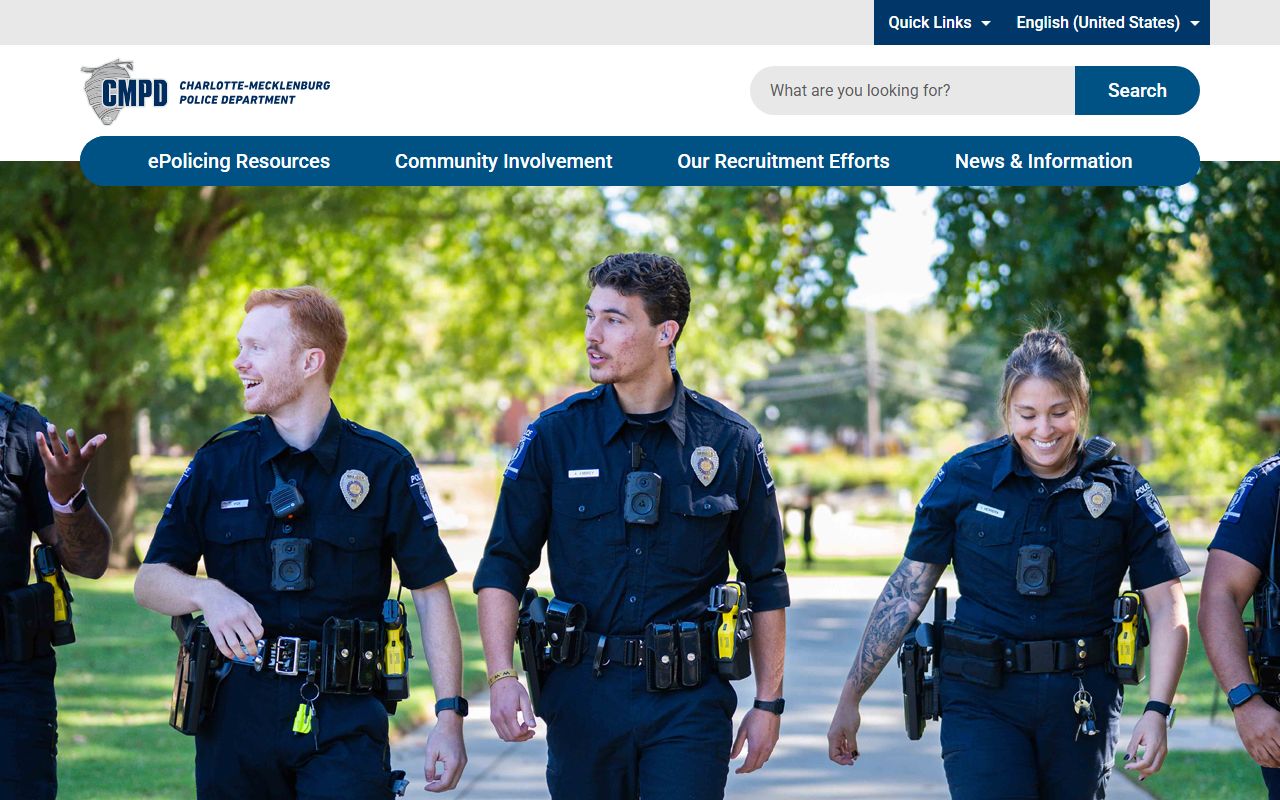
Police reports often tie into felony case files at the courthouse. An arrest report from CMPD becomes part of the evidence in a felony case. Both sets of records help paint a full picture of a case in Charlotte.
Note: Police records and court records are stored in different systems, so you may need to check both for complete Charlotte felony case details.
Felony Background Checks in Charlotte
You can get a criminal background check that covers Charlotte felony records through the state. The NC State Bureau of Investigation runs statewide checks. These pull from court records across all 100 counties in North Carolina. A name-based check costs $25. You fill out Form AOC-CR-314 and submit it to the clerk of court.
For Charlotte, you can submit the form at the Mecklenburg County Courthouse. The clerk processes the request and sends it to the SBI. Results come back in a few weeks by mail. You can also go through the SBI directly for a faster option. Fingerprint-based checks are more thorough and take about the same time. The NC Courts background check page explains each option in detail.
Public access terminals at the Mecklenburg County Courthouse let you do free name searches on the spot. These show local case data for Charlotte and the rest of the county. The terminals sit in the clerk office area. No appointment is needed. Just walk in during business hours and use them.
Charlotte Felony Case Process
A felony case in Charlotte starts with an arrest or indictment. CMPD or another agency makes the arrest. The case then moves to Mecklenburg County Superior Court. A grand jury reviews the evidence and decides whether to indict. If they do, the case goes to trial or a plea deal.
Each step creates records. The arrest report, indictment, motions, hearing transcripts, and final judgment all become part of the case file. These records are public under N.C.G.S. Chapter 132. Anyone can view them at the courthouse or through the online portal. Some records may be sealed if the judge orders it, but that is not common for adult felony cases in Charlotte.
After sentencing, the case file stays on record. The NC Department of Adult Correction tracks inmates who serve time. You can search their offender database to find out if someone is in custody. This system covers all state prisons and is separate from the court records at the Mecklenburg County Courthouse.
Felony Record Expungement in Charlotte
Some felony records in Charlotte can be expunged. Expungement removes a record from public view. Not all felonies qualify. The rules depend on the charge, the outcome, and how much time has passed. North Carolina law sets strict limits on which cases can be cleared.
The NC SBI expungement page lists the steps. You file a petition with the Mecklenburg County Clerk of Superior Court. A judge reviews it and decides. If granted, the record is removed from public databases. The NC Courts forms page has the petition forms you need. There is no charge to file the petition itself.
Dismissed charges and not guilty verdicts are the easiest to expunge. Certain low-level felony convictions may also qualify after a waiting period. Each case is different. Talk to a lawyer if you want to know whether your Charlotte felony record can be cleared.
Note: Expunged records will no longer show up in searches of the NC eCourts portal or at the Mecklenburg County Courthouse.
Charlotte Felony Case Notifications
Victims of crimes in Charlotte can track felony cases through the state notification system. VINE sends alerts when an offender's custody status changes. You can sign up for free. The system covers all of North Carolina, including Mecklenburg County. Alerts come by phone, email, or text.
The NC Sex Offender Registry is another public tool. It shows where registered offenders live. You can search by name, city, or zip code. Charlotte residents use this tool often. The data comes from the NC SBI and is kept current. All of these resources are free and open to the public.
Mecklenburg County Felony Records
Charlotte is the county seat of Mecklenburg County. All felony cases in Charlotte go through the Mecklenburg County court system. The county page has more details on the courthouse, fees, forms, and related resources. It also covers other towns in the county that share the same court.